MyInvisalign
0-to-1 global patient platform
Designed the first patient-facing mobile platform for Align Technology, helping more than 1 million patients stay compliant with Invisalign treatment across 60+ markets and 18 languages.
The Challenge
Invisalign treatment success depends on consistent patient adherence, yet many patients struggle to maintain wear schedules and track progress over time. This lack of consistency reduces visibility for both patients and providers, often leading to delayed treatment, lower confidence, and increased operational overhead.
The Solution
I designed behavior-driven features including wear-time tracking, reminders, progress sharing, Smile Gallery, and Virtual Care to improve adherence and support better communication between patients and providers without adding friction to the experience.
The Impact
- 1M+ active users across 60+ markets
- Available in 18 languages worldwide
- Established the foundation for Align Technology's digital orthodontic experience
- Enabled remote care at scale, reducing need for in-person appointments
Research & Insights
To define the product direction, I conducted market research and interviews with both Invisalign patients and treatment providers—uncovering two distinct but equally critical sets of needs.
“Providers need better visibility into patient behavior and a way to guide treatment remotely without adding operational overhead.”
— Provider Research, Key Insight
Design Process
01Market & Patient Research
Align Technology is a pioneer in the invisible aligner space, requiring ongoing interaction between patients and orthodontists throughout treatment. Interviews with existing and prospective patients revealed key pain points: forgetting to reinsert aligners after meals, mentally tracking wear time, missing aligner change dates, and scheduling appointments just to get reassurance. Insight: patients lack simple, reliable tools to build consistent habits and feel confident they are on track.
02Provider Research & Synthesis
I also interviewed orthodontists and dentists to understand what would make the app valuable enough to recommend to patients. Key needs included: helping patients consistently track aligner wear time, enabling easy sharing of wear-time data, reminding patients when to switch aligners, and allowing providers to review progress and give recommendations without requiring in-person visits. Insight: providers need better visibility into patient behavior and a way to guide treatment remotely.
03Iterative MVP Design
As the sole product designer on this 0→1 initiative, I led end-to-end design—from stakeholder alignment and research to delivery and implementation. Because this was Align Technology's first consumer-facing mobile product, I approached it as a scalable MVP, delivering production-ready designs every two weeks. This allowed the team to quickly validate ideas, adapt to feedback, and continuously evolve the product while building a strong foundation for future growth.
04Design System Foundation
At the time, Align Technology did not have an established mobile design system. While designing each feature, I developed a library of reusable UI components, iconography, and visual assets to ensure consistency and scalability. This work became the foundation for the first version of the mobile design system, enabling faster development and more consistent user experiences across the product.
Research & Insights
To define the product direction, I conducted market research and interviews with Invisalign patients and treatment providers. The research revealed two connected needs: patients needed simple tools to build treatment habits, while providers needed better visibility into patient behavior.
Key provider insight
Providers need better visibility into patient behavior and a way to guide treatment remotely without adding operational overhead.
Patient needs
- Remember to reinsert aligners after meals or meetings.
- Track daily wear time without mental math.
- Understand aligner change dates and treatment progress.
- Get reassurance without scheduling extra appointments.
Provider needs
- Help patients consistently track aligner wear time.
- Review wear-time logs and progress photos remotely.
- Give recommendations without requiring in-person visits.
- Recommend an app that is simple enough for patients to use daily.


Key Features
Designed with user needs at the forefront, every feature enhances the patient experience
Wear-Time Tracking & Reminders
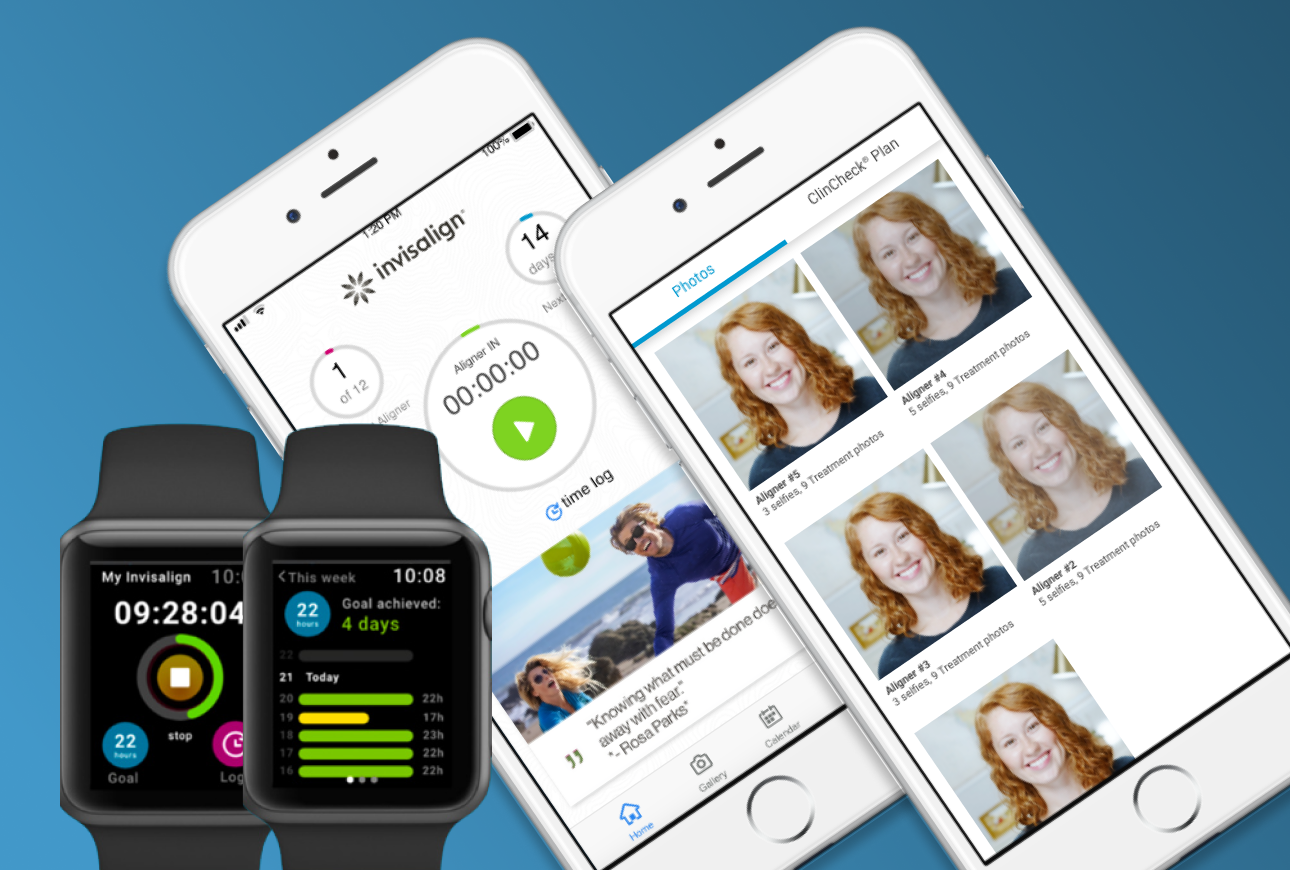
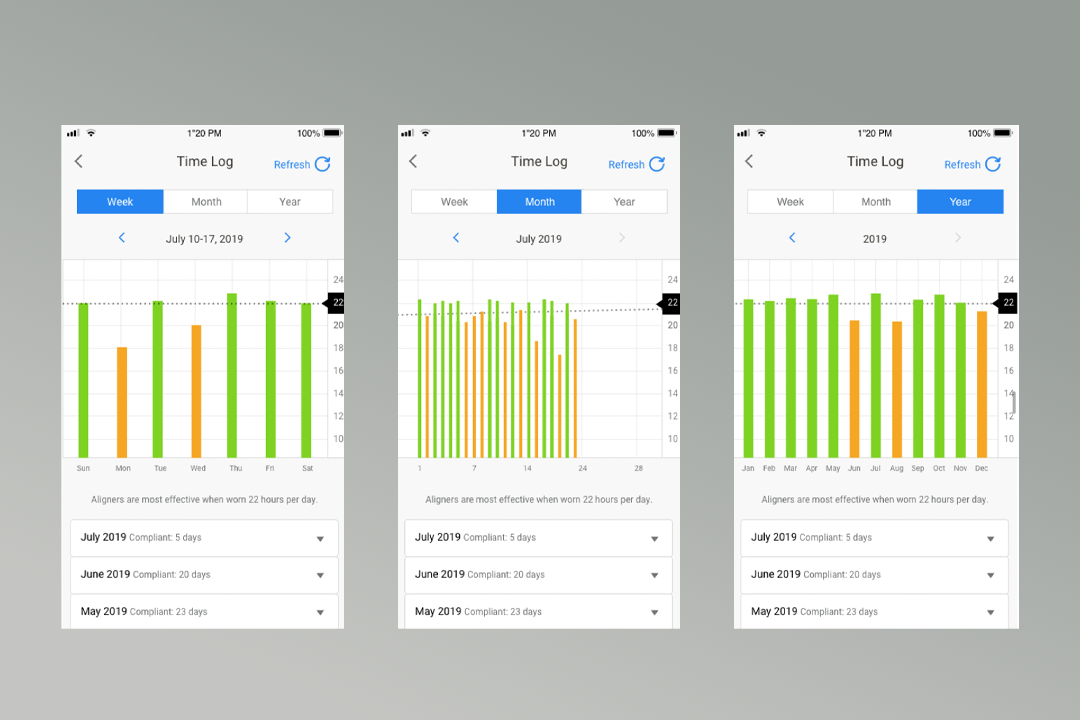
A simple timer lets patients pause wear time when aligners are removed and resume when reinserted. Configurable reminders prompt patients when it's time to put aligners back in, automatically logging daily usage for provider review.
Progress Visibility & Scheduling
A calendar and progress tracking experience provides clear structure around aligner changes. Patients always know their current aligner set, upcoming change date, and where they stand in their overall treatment plan.
Treatment Dashboard
The central hub shows current daily wear time, total aligner sets, current stage, duration per stage, and upcoming change date—all dynamically driven by the provider's plan to reduce uncertainty and reinforce adherence.
Smile Gallery
Patients are prompted to take photos at each aligner change (every 5-14 days). Images are automatically organized into a structured gallery for side-by-side progress comparison, reinforcing motivation and confidence.
Virtual Care
Patients capture a standardized set of oral photos using in-app guidance and send them to their provider with a message. Providers review progress and respond with recommendations—no office visit required.
Provider Visibility
Shareable wear-time logs and Smile Gallery give providers actionable data to guide treatment remotely, enabling more informed decisions and efficient remote care without adding operational overhead.


Key Flows
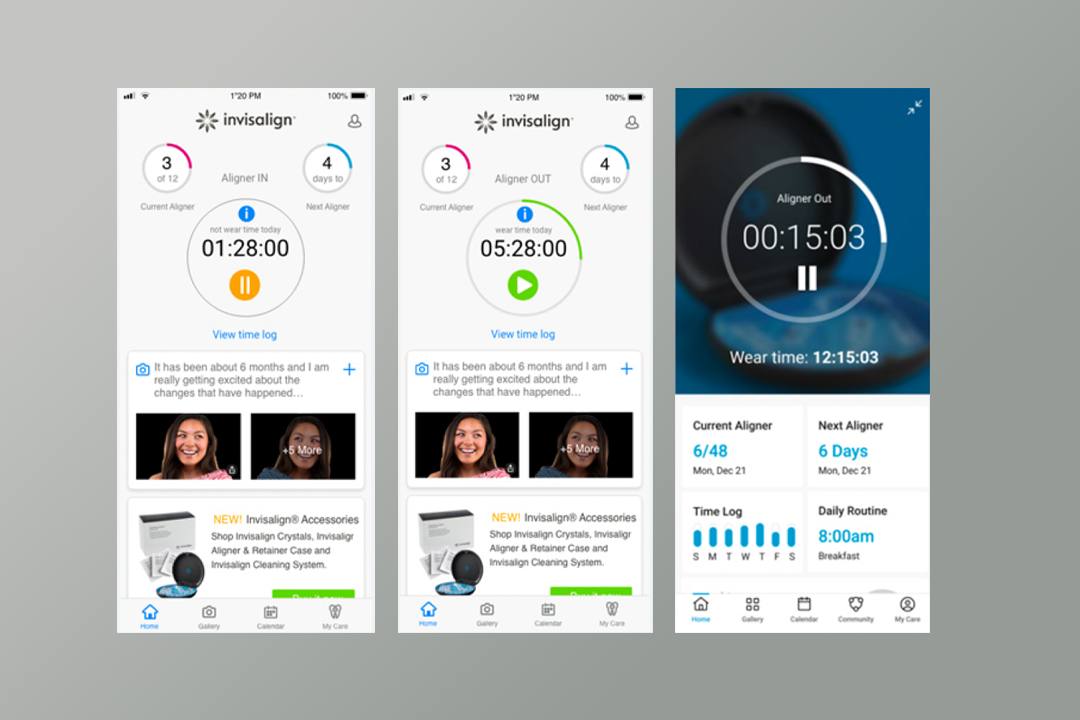
Dashboard — treatment progress and wear-time overview
Wear-time timer and reminder configuration
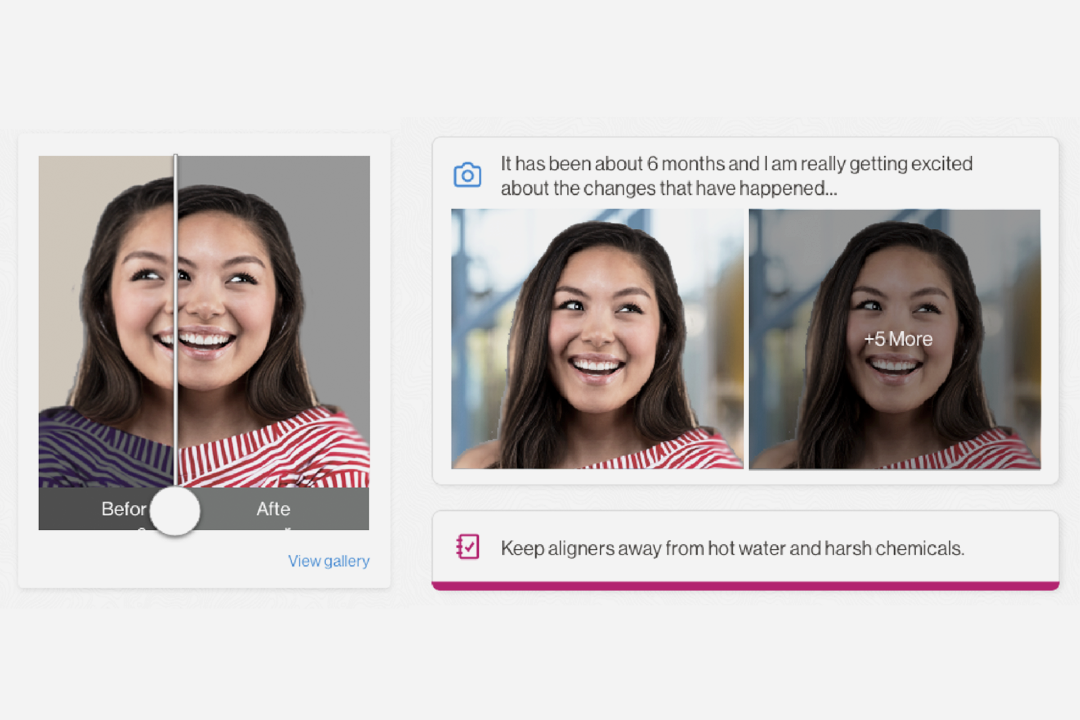
Smile Gallery — visual progress timeline
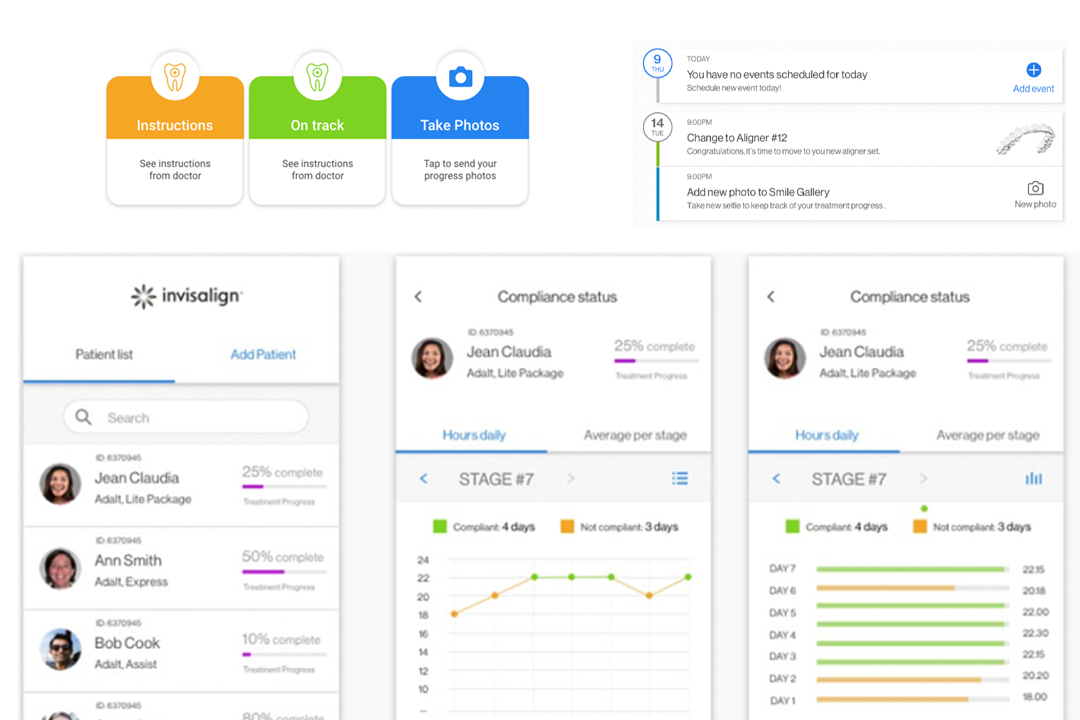
Virtual Care — remote provider communication
Progress Visibility & Adaptive Scheduling
The calendar and progress experience gives patients clear structure around aligner changes. Based on provider recommendations, the system can update the treatment schedule, milestones, reminders, and appointments so patients follow the most current plan.


Apple Watch Support
To reduce friction and support real-time habit formation, I extended the experience to Apple Watch. Patients can quickly start or pause the timer, track progress, and sync data with the mobile app for reminders and treatment updates.


Challenges & Constraints
- As the sole designer, prioritization and maintaining a steady delivery cadence across multiple development teams was the primary challenge.
- Align Technology had no established mobile design system at the outset — I developed reusable components, iconography, and visual assets while designing each feature.
- These constraints shaped a scalable design approach that balanced speed, quality, and long-term consistency.
- Close collaboration with product managers, regular design reviews with engineers, and stakeholder alignment kept the team in sync and supported smooth implementation.
What I Learned
- Today, MyInvisalign is available in 60+ markets, supports 18 languages, and serves over a million active users worldwide — the largest 0→1 product I've designed.
- Product design is never a solo effort. Successful outcomes depend on close collaboration across product, engineering, content, and data teams working together to solve complex problems.
- Iterative MVP delivery (bi-weekly sprints) proved highly effective for a 0→1 product — enabling rapid validation and continuous evolution while building a scalable foundation.
- Building the mobile design system in parallel with feature delivery was a significant investment that paid dividends in consistency, speed, and cross-team alignment.